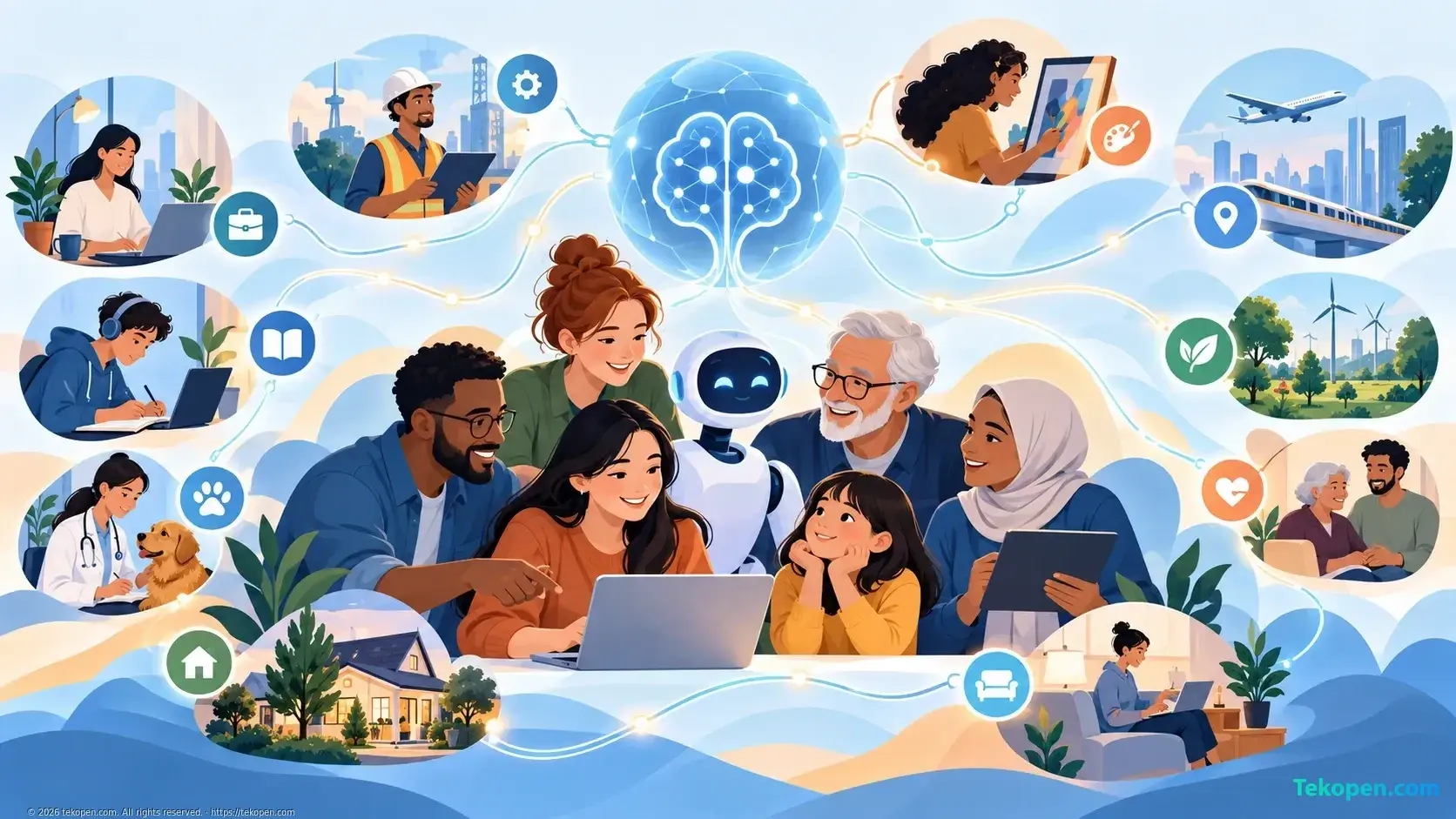
AI refers to systems that perform tasks typically requiring intellectual abilities, such as recognizing patterns, creating content and supporting decisions. In the future, AI could help people do more, but also change jobs, privacy and levels of autonomy. Its impact depends not only on the technology, but also on how it is deployed and how its benefits are distributed.
Current capabilities are not predictions
AI can currently draft text, translate, analyze data and assist with programming. However, a fluent answer is not guaranteed to be correct; effectiveness still depends on the task, the data and verification.
If systems become more reliable, the scope of automation could expand. But we cannot yet say when AI will replace an entire occupation, or equate its ability to process information with human consciousness.
Jobs change task by task
An occupation consists of many tasks, not a single action. AI can help draft reports, while people still need to verify figures, negotiate and take responsibility.
A hypothetical example: a customer service employee uses AI to draft responses based on company policies. They still check the conditions that apply and handle exceptions. Skipping the checking step increases speed, but could also increase errors.
Some roles could shrink as most of their tasks are automated. Roles involving AI integration, oversight and evaluation could also grow, but may not offset job losses for the same group of workers. That is why we need to look at AI's practical value in getting work done, not just its ability to create content.
Learning, health and daily life
In learning, AI can explain concepts in different ways and create practice exercises. But learners who only take the answers risk skipping the process of reasoning things through themselves. The benefits lie in feedback and practice, not in handing all learning over to a machine.
In healthcare, AI can help organize information or explain terminology. This does not mean that conversational tools can diagnose independently or make treatment decisions in place of a doctor.
In daily life, AI can help with planning and comparing options. When connected to transaction tools, it is important to clearly define when AI agents must ask for permission, especially before making payments or sharing data.
Risks involve both data and dependence
False information can be presented very convincingly. Synthetic voices and images can also be used for impersonation. Unusual requests to transfer money should be verified through an independent channel.
Sensitive data entered into AI may be subject to different storage, access and usage conditions depending on the service. Do not assume that every conversation is private.
Another risk is placing too much trust in recommendations: using AI frequently but rarely checking its output can weaken the habit of making independent judgments.
Who benefits, and how should we prepare?
People with devices, skills and access to training often find it easier to make use of AI. Those whose work is easy to automate but who lack opportunities to transition could face greater pressure. Its impact therefore also depends on policies for training and worker protection.
Capabilities worth investing in include subject expertise, information verification, communication and taking responsibility. Knowing how to write clear, easy-to-check AI prompts helps you use the tools better; more importantly, you need to know when not to delegate decisions to AI.
Frequently asked questions
Do you need to know how to code to adapt to AI?
Not everyone needs to code. For many jobs, the ability to describe tasks, understand data and evaluate results matters more. Programming is useful when you need to integrate AI into systems or automate complex workflows.
How can you tell whether using AI actually makes your work more efficient?
Compare completion time, quality and the number of errors with your previous approach, including the time spent checking and correcting the results. A quickly generated draft may not save effort if it requires extensive editing or introduces risks.