ElevenLabs announced that it has completed a $300 million employee share buyback, bringing the company's valuation to $22 billion. In its September 30, 2026 announcement, the audio AI company said its new valuation is double that of its February 2026 Series D round, while enterprise customers now account for 55% of revenue.
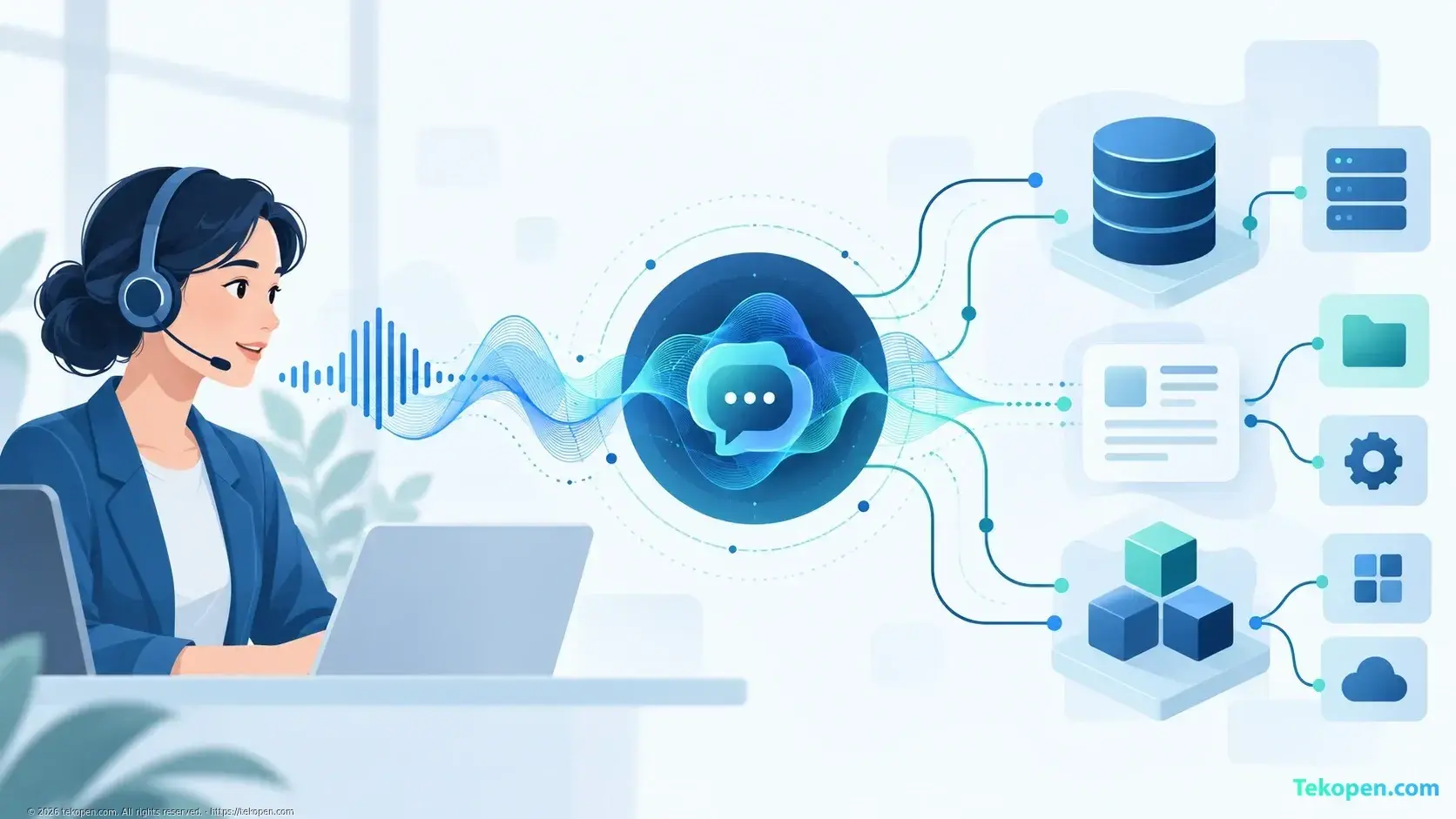
The valuation is not the only notable development. ElevenLabs is broadening its focus from voice generation to a conversational AI platform connected to organizations' data and systems. For businesses, this direction brings voice AI closer to workflows such as customer service, appointment scheduling and request handling, rather than simply reading existing content aloud.
$300 million transaction provides liquidity for employees
According to ElevenLabs, Wellington and T. Rowe Price led the transaction. New investors included BDT & MSD, EQT, GIC, Goldman Sachs, OTPP and Sapphire Ventures, alongside several existing investors.
This is a purchase of shares from employees and should not be understood as a new funding round that puts the entire $300 million into the company's coffers. ElevenLabs said the aim was to give employees an opportunity to realize some of the value of their shareholdings.
The $22 billion figure reflects the valuation in the announced transaction. It does not represent the company's revenue, profit or cash holdings. The announcement also does not provide full financial results with which to assess profitability.
ElevenAgents becomes the growth focus
ElevenLabs said ElevenAgents, its conversational AI agent platform, now handles more than 15 million conversations a week, three times the volume in February 2026. The product's annual recurring revenue, or ARR, also more than tripled over the same period. The company did not disclose the absolute ARR figure in its post.
Customers named include Stripe, Deutsche Telekom, DoorDash-owned SevenRooms, Admiral, Customers Bank and Cadence, as well as the governments of Ukraine and Greece. The tasks described range from refunds, exchanges and insurance renewals to phone plan upgrades, medical appointment scheduling and access to public services.
These figures and examples were published by ElevenLabs and are not independently verified findings in this article. They indicate the range of uses the company is targeting, but are not enough to establish that every organization would achieve similar results.
Unlike text-to-speech tools, conversational agents need to receive requests, understand context and work with business systems. For example, a call about a payment transaction can only be fully handled if the agent accesses the right data and has permission to perform the appropriate action.
New voice models support this direction
Before the valuation announcement, ElevenLabs introduced Eleven v4 and Eleven v4 Turbo on September 28, 2026. According to the company, both support more than 90 languages, with improved emotional expression and preservation of voice characteristics. The Turbo variant is designed for situations requiring fast responses, including conversational agents.
ElevenLabs reported a median inference latency of around 100 milliseconds and a median time to first audio of around 150 milliseconds for Turbo. These are two different metrics, not the time needed to complete an entire exchange with a customer.
In real-world deployments, response speed also depends on speech recognition, request processing, data queries and network connectivity. Model measurements therefore cannot replace measurements of the entire system.
Natural expression can make calls easier to follow. However, a convincing voice does not prove that an answer is accurate or that a business action has been carried out correctly.
Omnichannel conversations put data at the center
ElevenLabs said the number of businesses deploying omnichannel support with ElevenAgents has doubled since February 2026. The company describes a journey that can begin on WhatsApp, move to a phone call and end with a follow-up email.
The value of this approach lies in maintaining context throughout. If each channel operates separately, customers may have to explain the same issue again. Connecting these touchpoints, by contrast, requires correctly identifying customers, synchronizing their interaction history and controlling access permissions.
This is where CRM systems that manage customer data and interactions become relevant. The voice layer is the interaction interface; the ability to resolve requests also depends on the data and processes behind it.
What cannot yet be inferred from the announcement
ElevenLabs cited an analysis of its customers in which voice agents resolved issues 31% faster than chat agents on average. However, the announcement does not provide enough detail about the methodology, analysis sample or request classification to treat this as a general improvement for all businesses.
Deployment costs, terms of use and the extent of integration are also not fully described. For customer service systems, the scope and measurement methods in an SLA remain important alongside voice quality.
The announcement lists many situations in which agents can take action, but does not explain the approval mechanisms for each type of transaction in detail. The distinction between answering questions and changing customer data therefore still needs clarification, much like the question of when AI agents need to ask for permission.
What has been announced shows that ElevenLabs is putting enterprise conversational AI at the center of its growth. Deployment feasibility at individual organizations, financial performance and the degree of control over actions remain factors that need separate assessment; they cannot be inferred from the $22 billion valuation alone.
Frequently asked questions
Is the $22 billion valuation a stock market capitalization?
The announcement describes this as the valuation in an employee share transaction. The figure should not be called a public market capitalization or used in place of revenue and profit.
Does ARR more than tripling mean company-wide revenue grew by the same amount?
No. The published figure applies to ElevenAgents' ARR. ARR reflects recurring revenue on an annualized basis, which differs from the total revenue recognized by the entire company during a given period.
Related articles
Further reading
OpenAI reveals an unauthorized AI reasoning extraction campaign
AI grocery shopping: How does Safeway in ChatGPT help with shopping?
The Den uses AI to reduce paperwork as it opens a second location
Using AI to support your work: How to get started effectively
Grok Bot Marketplace divides marketing work among specialized bots
OpenAI and America’s SBDC expand AI training for small businesses